School & Group Programs
Outdoor Science Field Trips
Our NGSS (Next Generation Science Standards)-aligned field trips offer hands-on, inquiry-based experinces to elevate your students’ learning!
Elementary (K-5)
-
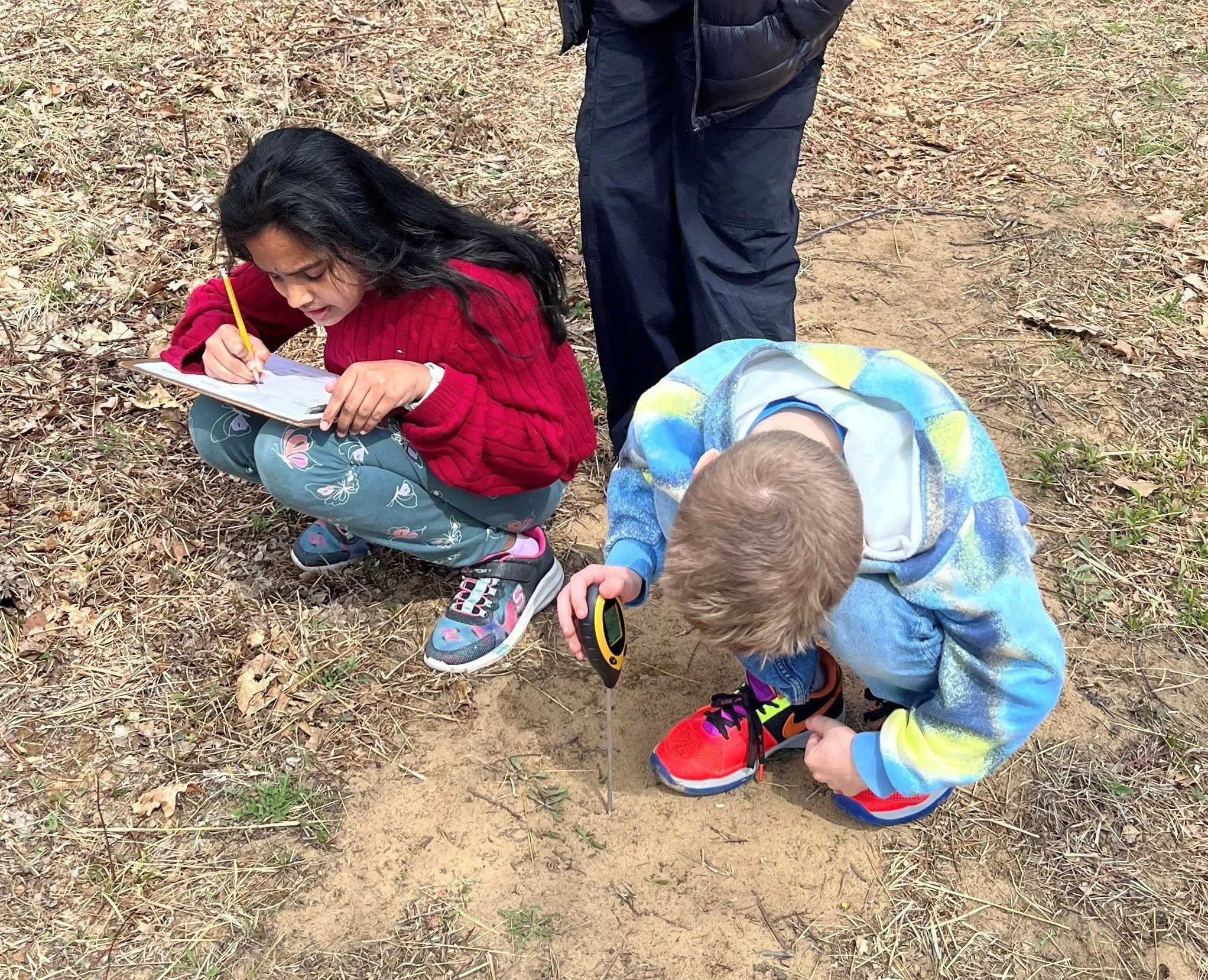
What makes a forest different from a meadow? This hands-on, outdoor lab teaches the scientfic method as students use soil probes, anemometers, light meters, thermometers, and moisture meters to collect and analyze data. Students use their data to construct arguments about how each habitat provide different resources to animals, and how animals adapt to different conditions.
Max group size: 80 students
Themes: cause and effect, data collection, abiotic factors, ecological relationships.
-
Students “adopt” a forest animal and learn about how its adaptations help it survive. We will use games, critical thinking and observations to investigate our animal neighbors and their lives.
Max group size: 80 students
Themes: adaptations, species interactions, habitat requirments, observation.
-
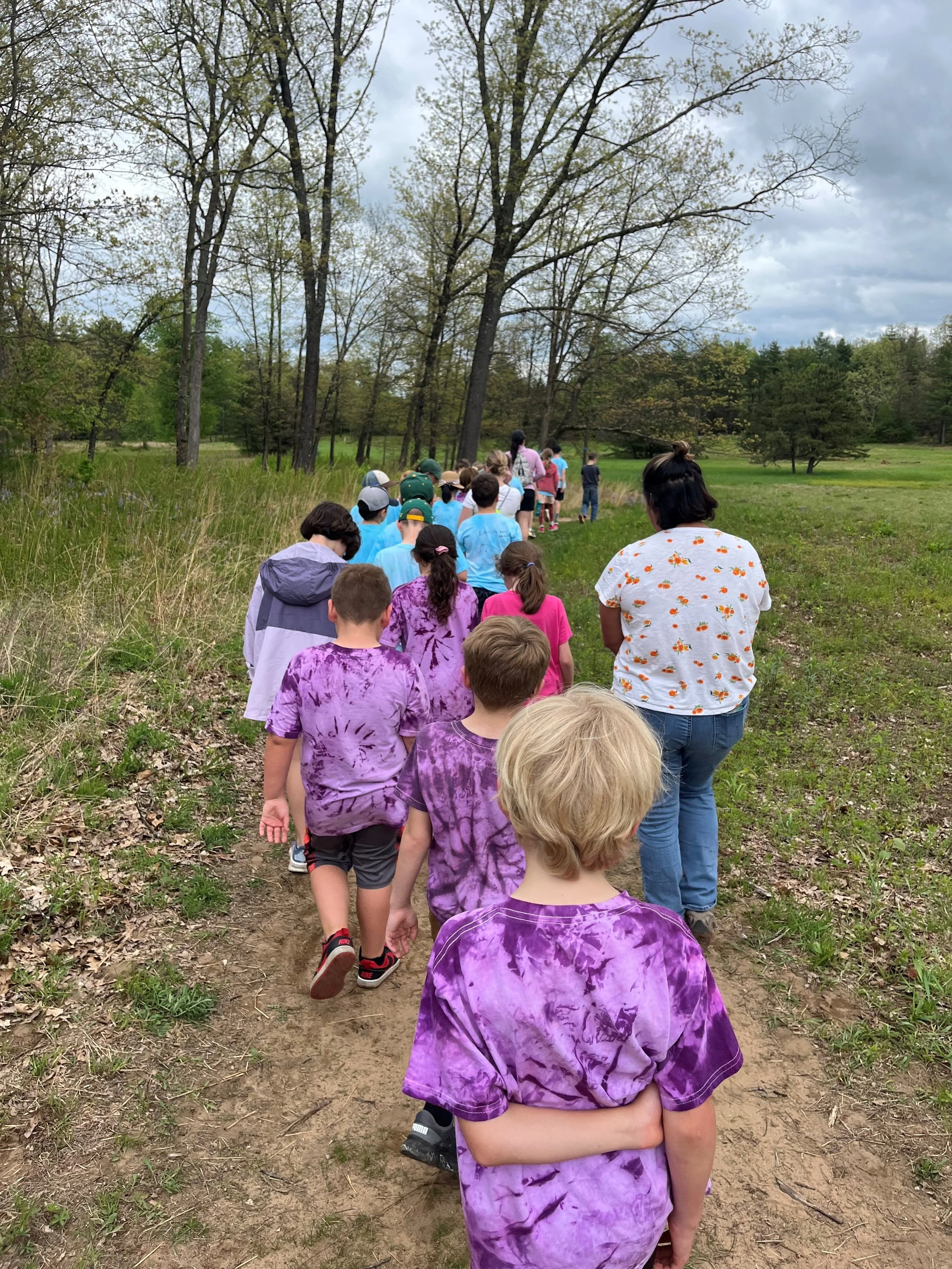
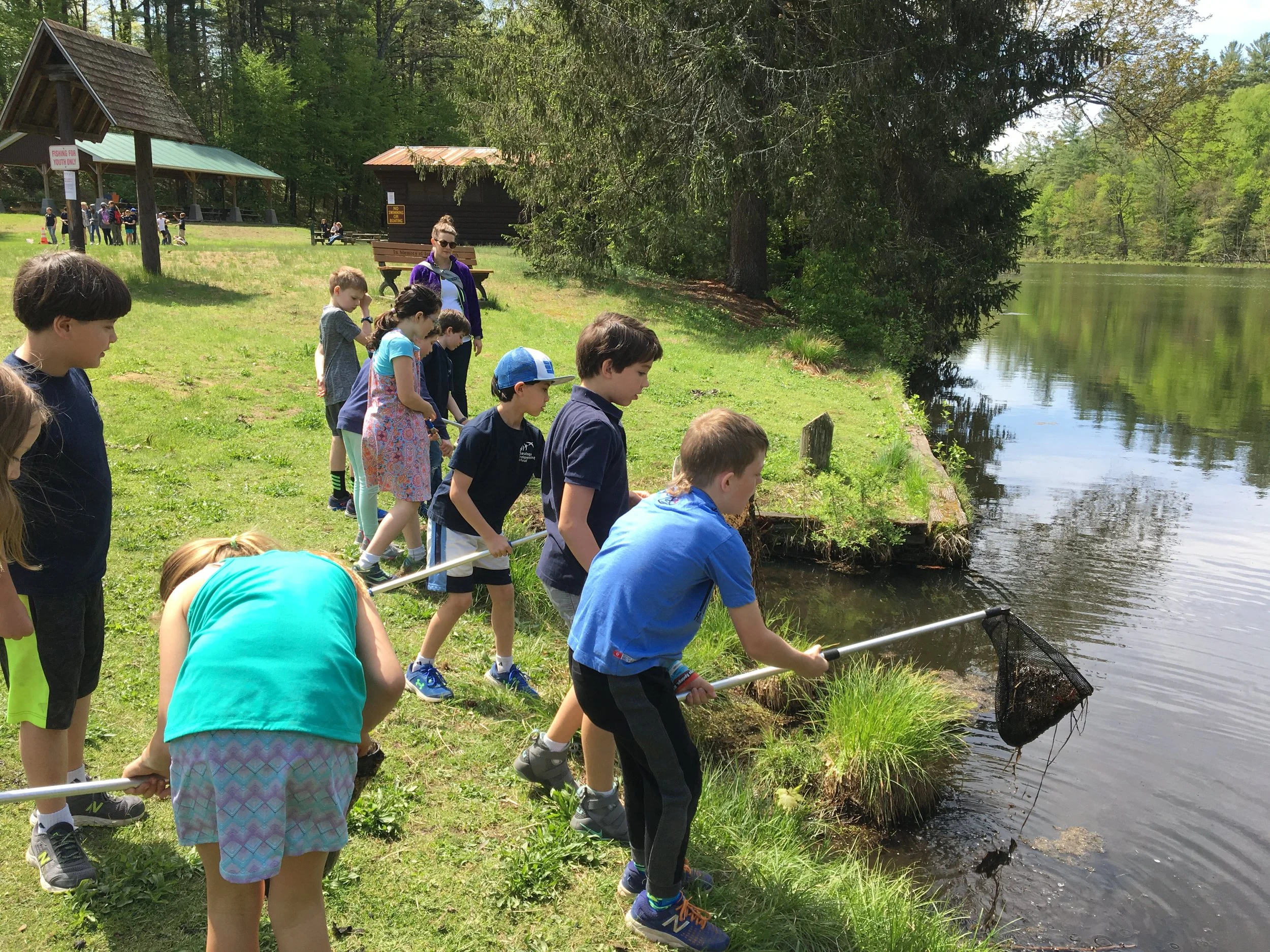
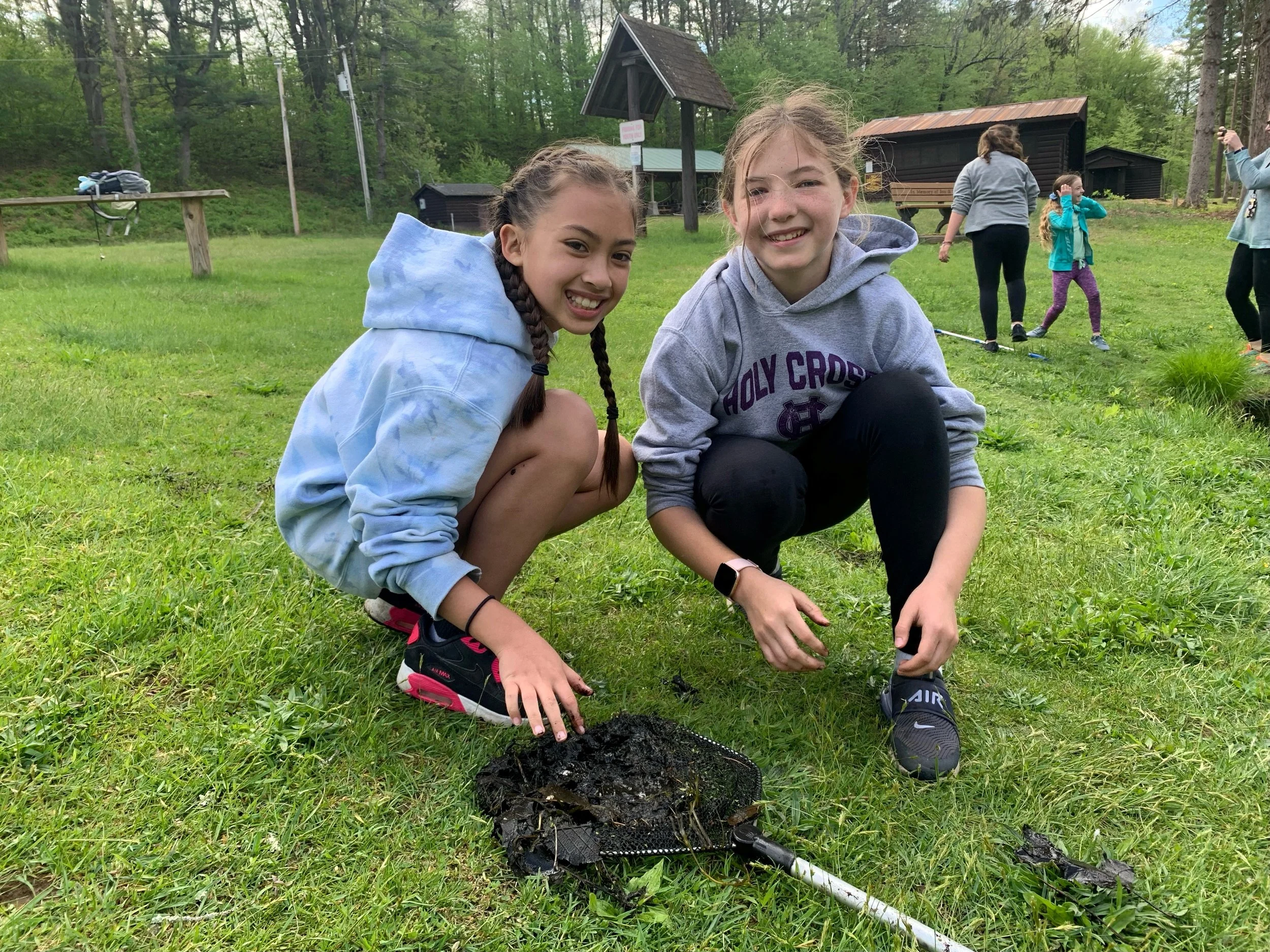
Explore three different habitats, the meadow, pond, and forest and how plants and animals are adapted to them. Learn about the endangered Karner blue butterfly, use dip nets to discover aquatic creatures, and explore forest ecology through a hands-on activity!
Mid-May through mid June field trips are likely to see the Karner blue butterfly.
Max Group Size: 80 students
Themes: observation, ecological relationships, hands-on investigation, stewardship.
Middle School (6-8)
-
Explore three different habitats, the meadow, pond, and forest and how plants and animals are adapted to them. Learn about the endangered Karner blue butterfly, use dip nets to discover aquatic creatures, and explore forest ecology through a hands-on activity!
Mid-May through mid June field trips are likely to see the Karner blue butterfly.
Max Group Size: 80 students
Themes: observation, ecological relationships, hands-on investigation, stewardship.
-
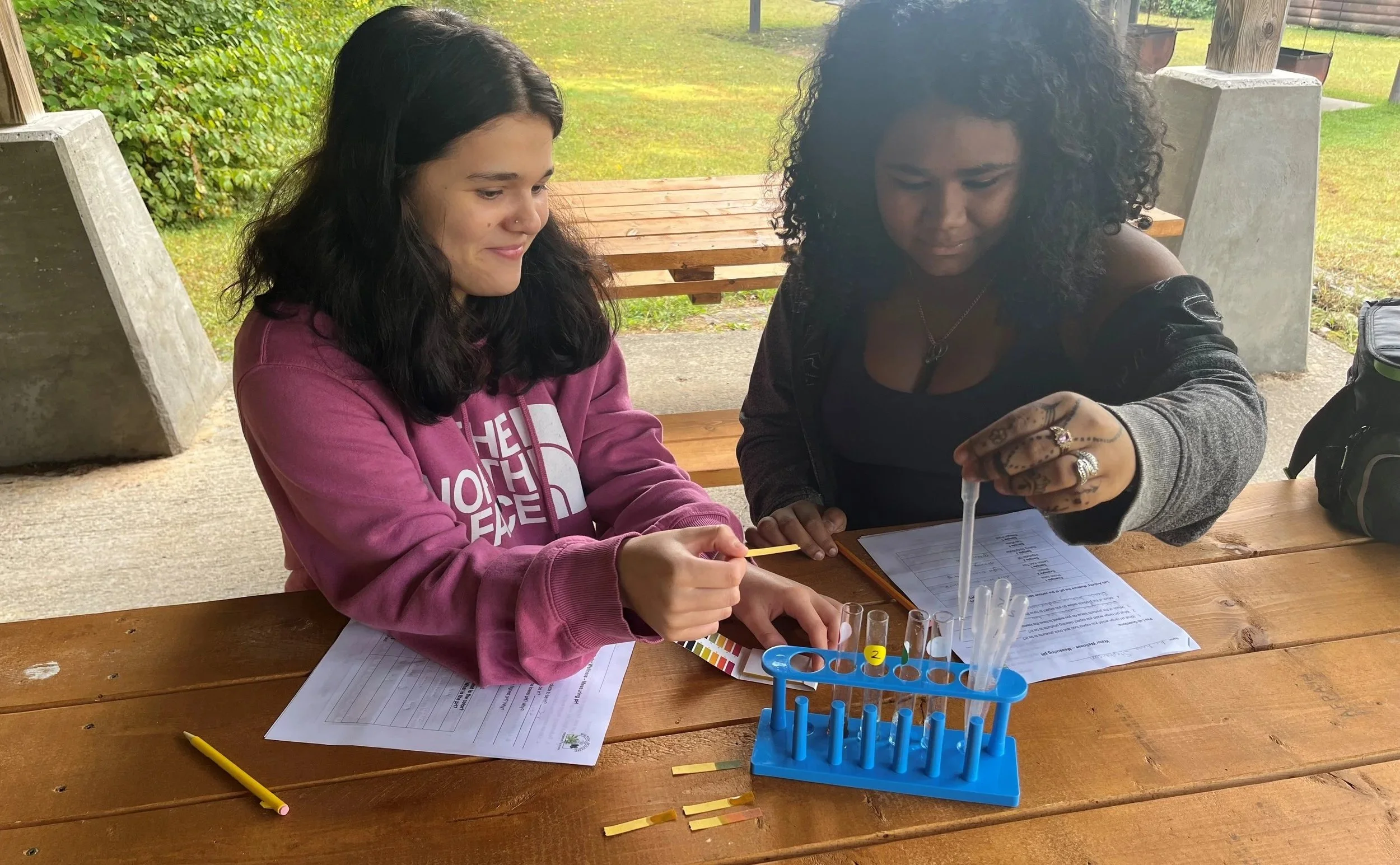
How are aquatic ecosystems affected by human activities? Students will use dip nets to collect different aquatic species in Delegan Pond. Participants will use mathematical skills to calculate aquatic biodiversity and determine habitat health. The second portion of this program will have students engaged in a hands-on water quality experiment.
Max Group Size: 60 students
Themes: ecological health, interpreting data, wetland ecology, casue and effect.
High School (9-12)
-
How are aquatic ecosystems affected by human activities? Students will use dip nets to collect different aquatic species in Delegan Pond. Participants will use mathematical skills to calculate aquatic biodiversity and determine habitat health. The second portion of this program will have students engaged in a hands-on water quality experiment.
Max Group Size: 60 students
Themes: ecological health, interpreting data, wetland ecology, cause and effect.
All Ages!
-
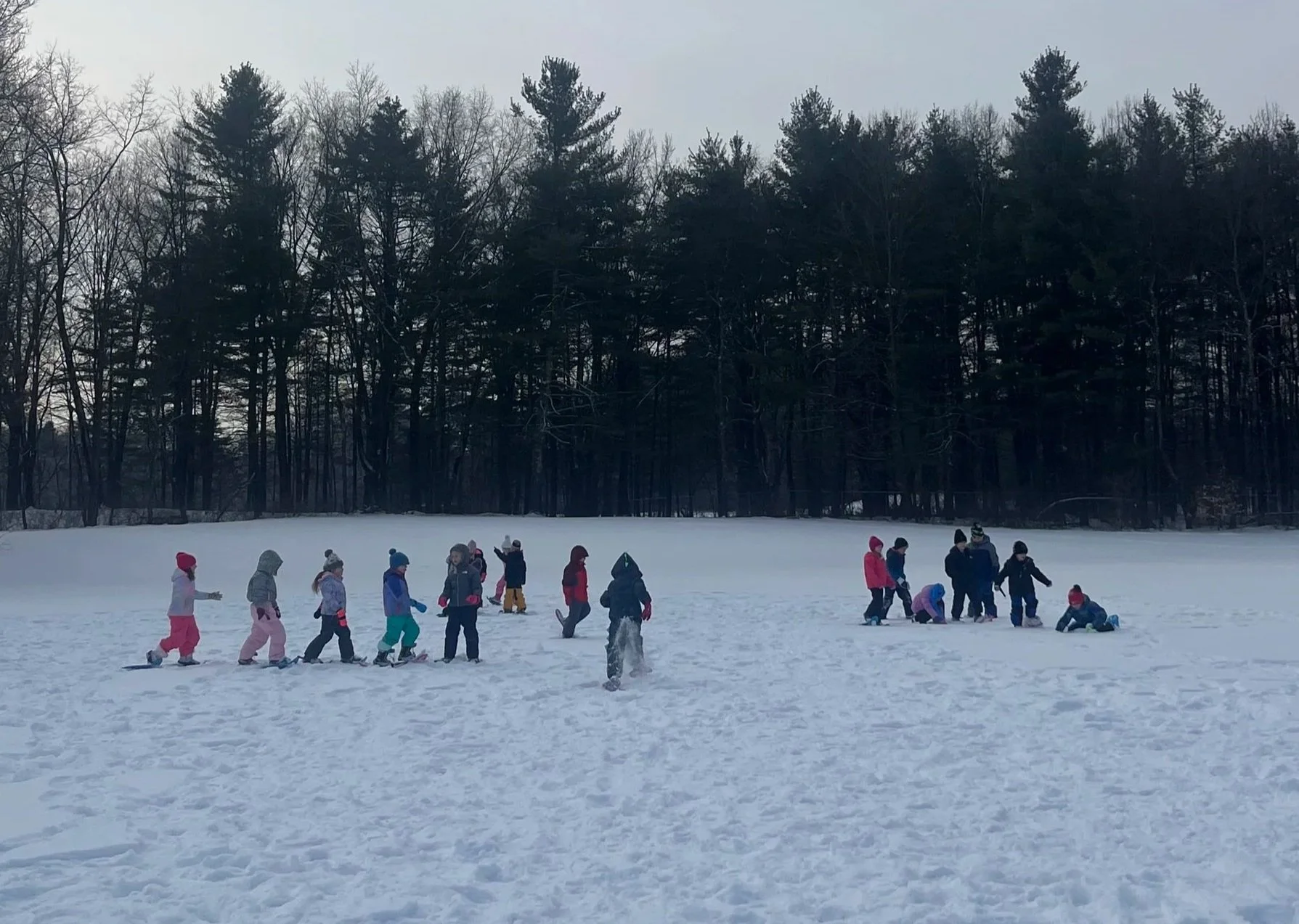
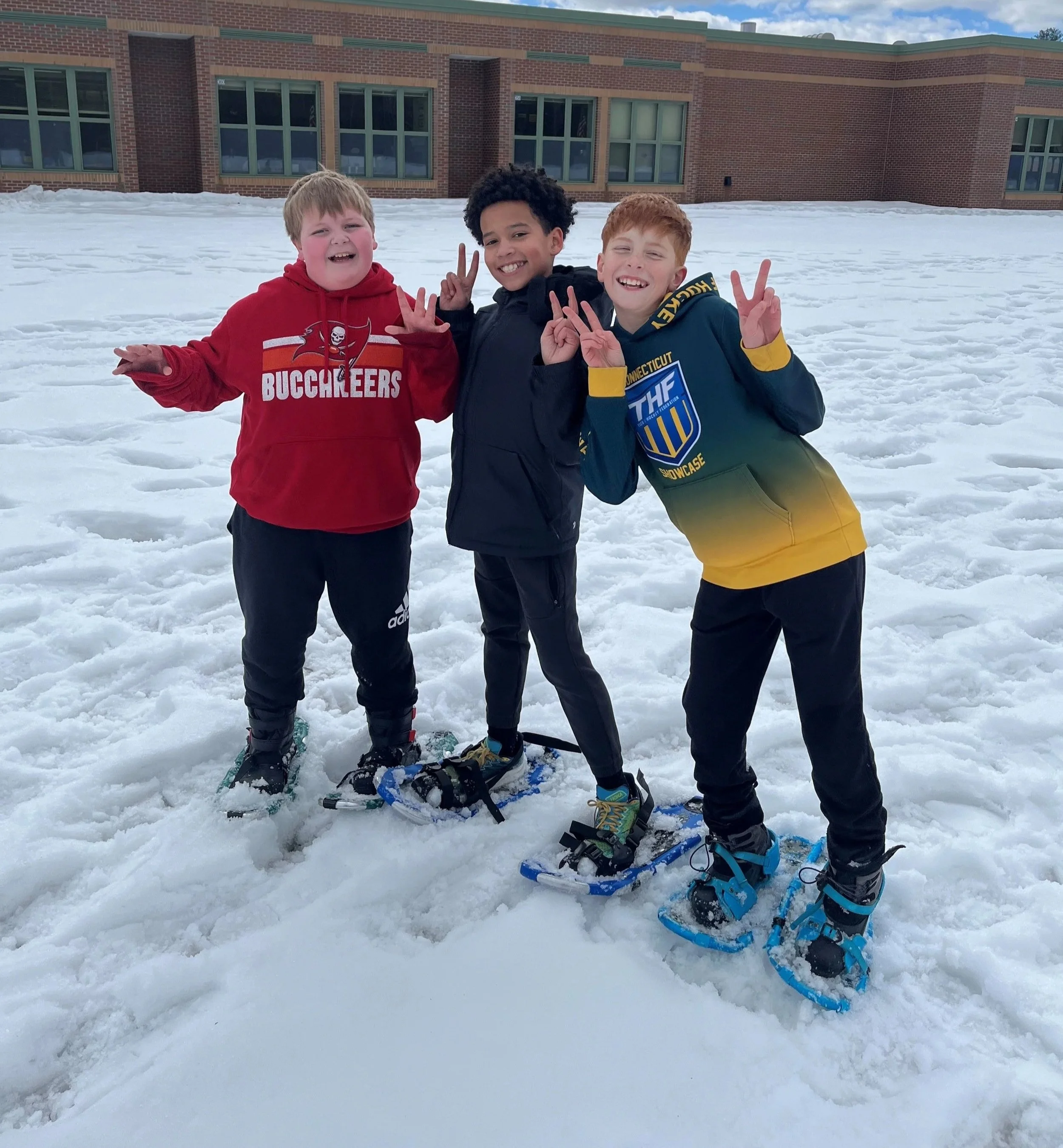
Shake up your usual field trip and come for a visit in the winter! Learn winter tree identification, animal tracking, and wildlife adaptations for winter survival.
This program runs on snowshoes, with an additional cost of $3/person.
Max Group Size: dependent on snowshoe sizes available. Contact us!
Themes: adaptations, observation, identification,
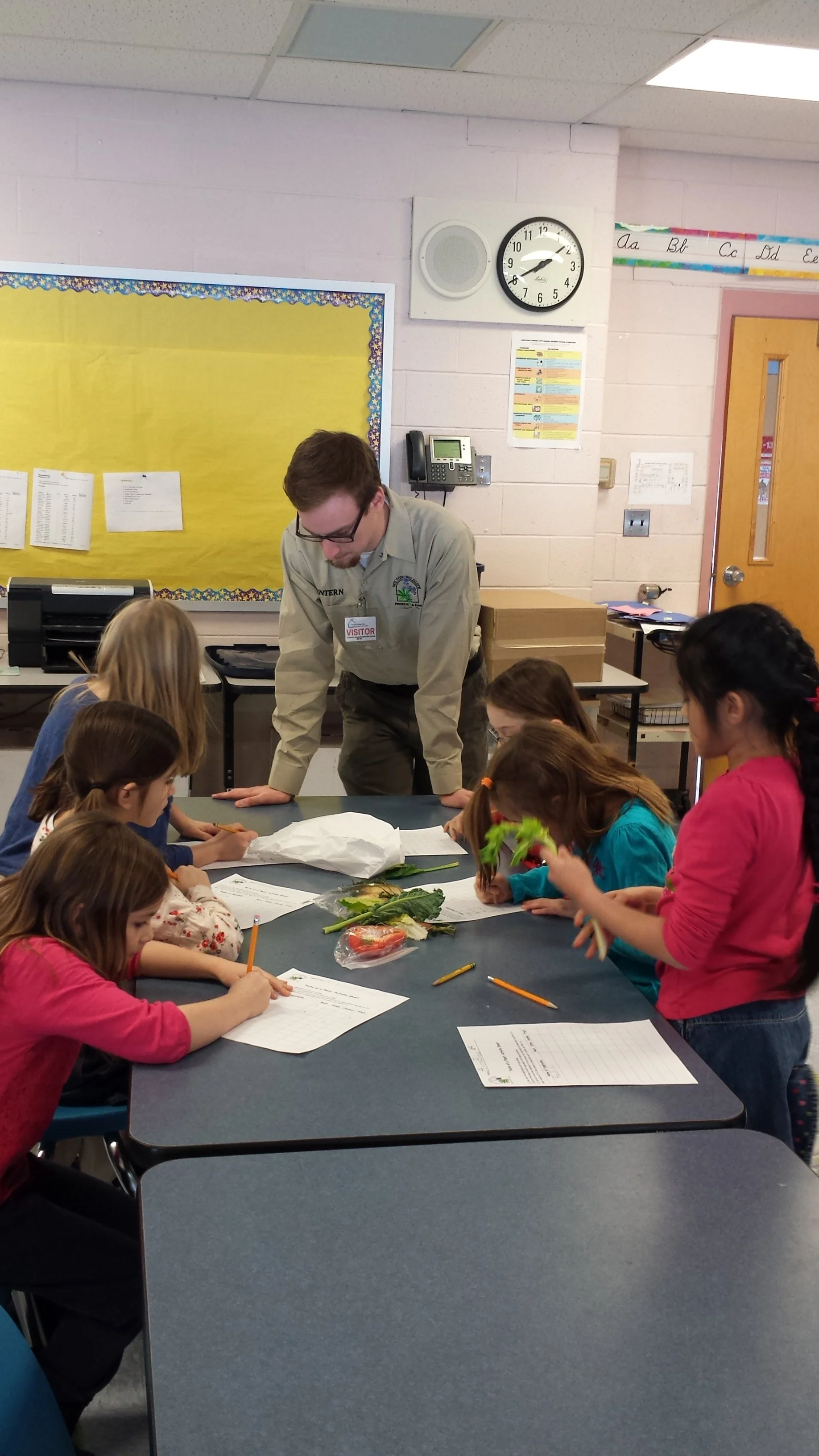
Our enthusiastic and knowledgeable environmental educators lead place-based, engaging educational programs, that get students out of the classroom, using hands-on science skills to learn about nature.
Helpful Information:
Scheduling: Field trips are typically two hours. Lunch in the pavillion can be added on either end. Field trips take place rain or shine.
Cost: Students and chaperones: $5. Teaching staff: free.
Group Size: Minimum group size is 10 paid participants. Please see individual programs for group size maximums.
Location: Field trips take place at the Town of Wilton’s Camp Saratoga with a pavillion and restrooms on site. There is no drinking water or trash cans in this carry-in, carry-out property. Please plan accordingly. There is bus parking avaliable.
hannah@wiltonpreserve.org | (518) 450-0321
Nature in the Classroom
Our NGSS (Next Generation Science Standards)-aligned classroom programs bring nature to your students by leading them through a hands-on investigation of specific elements of the ecosytem around them.
Although designed to meet school curriculum, scouting groups, after school programs and other groups have also enjoyed these programs!
Elementary (K-5)
-
Students will learn about two native butterflies (the endangered Karner blue and the monarch) through hand-on activities. Using prespective taking games, students will explore the lifecycles of each butterfly and learn about what they need to survive. Finally, students explore how these fluttery creatures interact with their environments, what it means to be an endangered species, and how we can help our butterfly neighbors.
Themes: structure and function, growth and development, interdependant relationships, ecosystem dynamics, adaptations.
-
Bring freshwater ecosystems to life in your classroom! Students will learn about the life cycle of local aquatic animals and their adaptations to pond life through prespective taking games and activities. Students will also investigate how the energy of the sun helps support food chains, food webs, and the entire ecosystem.
Max group size: 30 students
Themes: ecological relationships, life cycles, food webs, predator & prey relationships, adaptations.
-
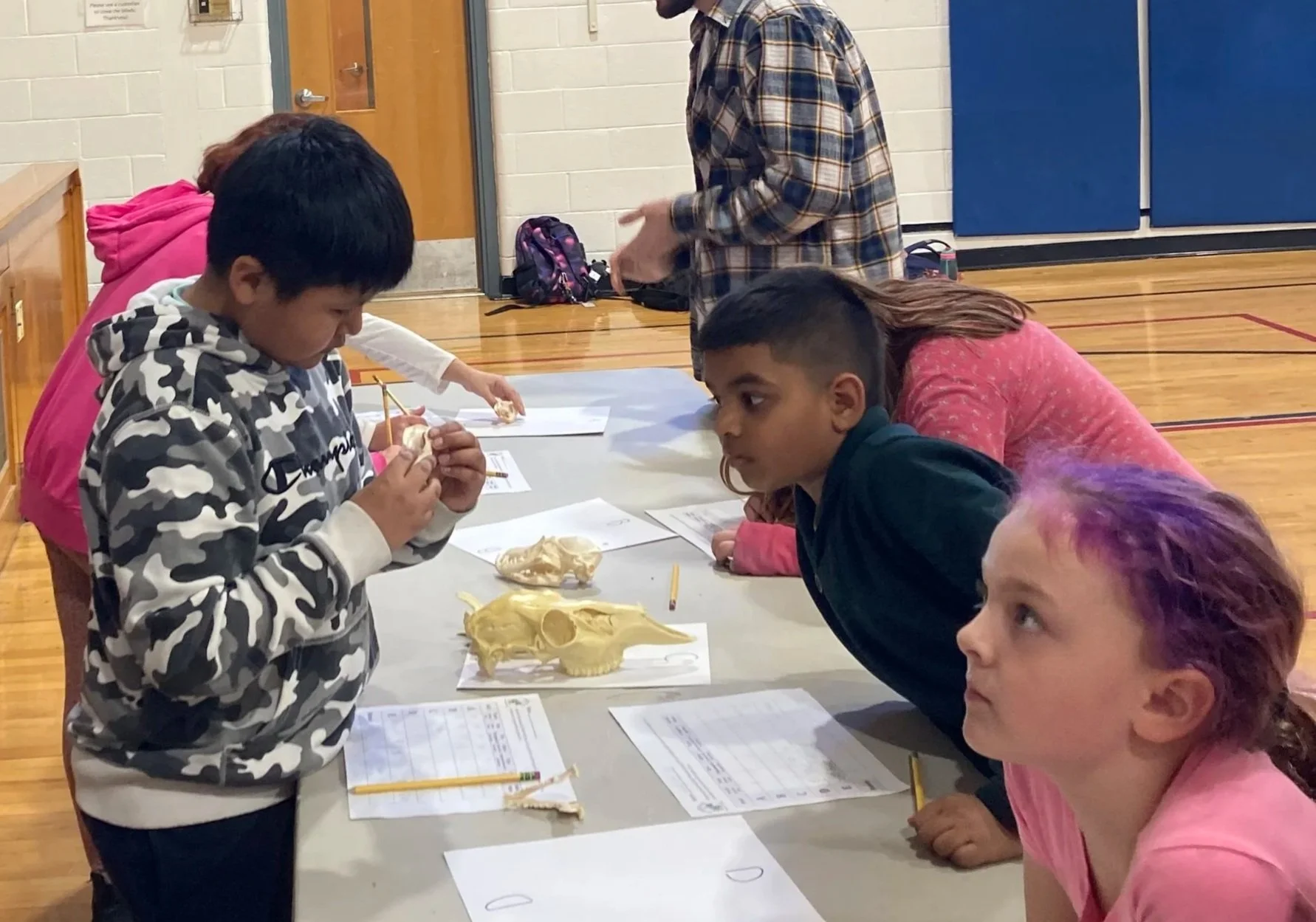
In this lab, students explore native mammals while learning how their skulls are adapted for their unique survival needs. Students will learn how to use skull size, teeth type and eye placement to critically evaluate each skull and identify the mammal. Finally students will discuss the importance of fur to mammals, and match animal skulls to their corresponding furs.
Themes: biodiversity, adaptations, interpreting data, ecological relationships, patterns, structure and function.
-
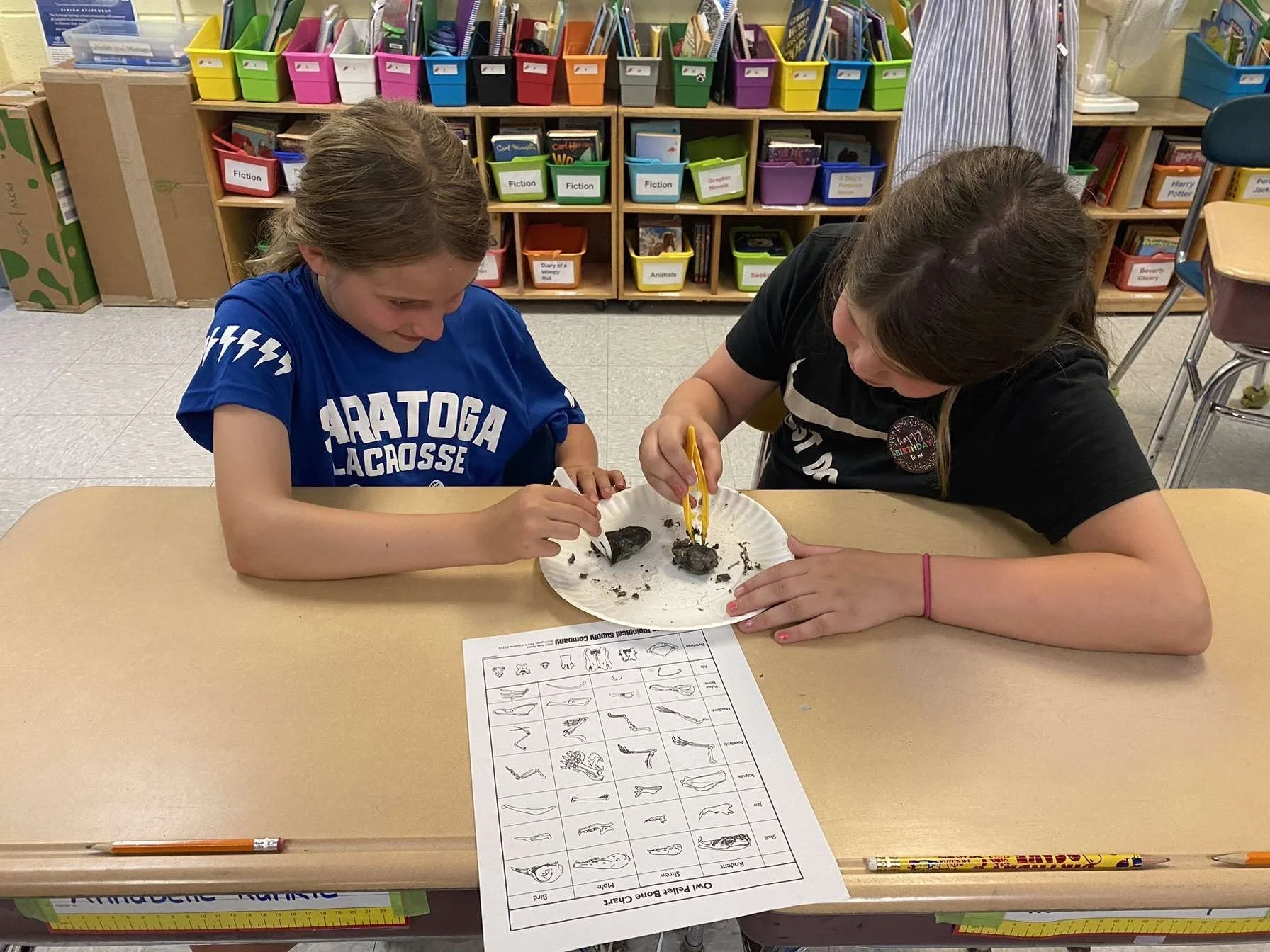
Students will use their critical thinking skills to learn about the 8 species of owls that share our state, and how their special adaptations help them survive throughout the year. In this hands-on lab, students will dissect owl pellets to discover what owls are eating and what that tells us about our feathered neighbors.
Please note, there is an additional $3 per student materials fee for this lab to cover costs of pellets.
Themes: adaptations, structure and function, patterns, ecological relationships.
-
Students will investigate roots, stems, leaves, and flowers of plants while learning about the role each of these parts play in plant life cycles. Students will also learn about adaptations of the wild blue lupine, a native plant and the essential food for the endangered Karner blue butterfly. As an extension, students can start lupine plants in the classroom, and plant their lupine plants in the meadow habitat of the Karner blue butterfly during a spring field trip.
Themes: observation, multisensory investigation, adaptations, structure and function, ecological relationships.
-
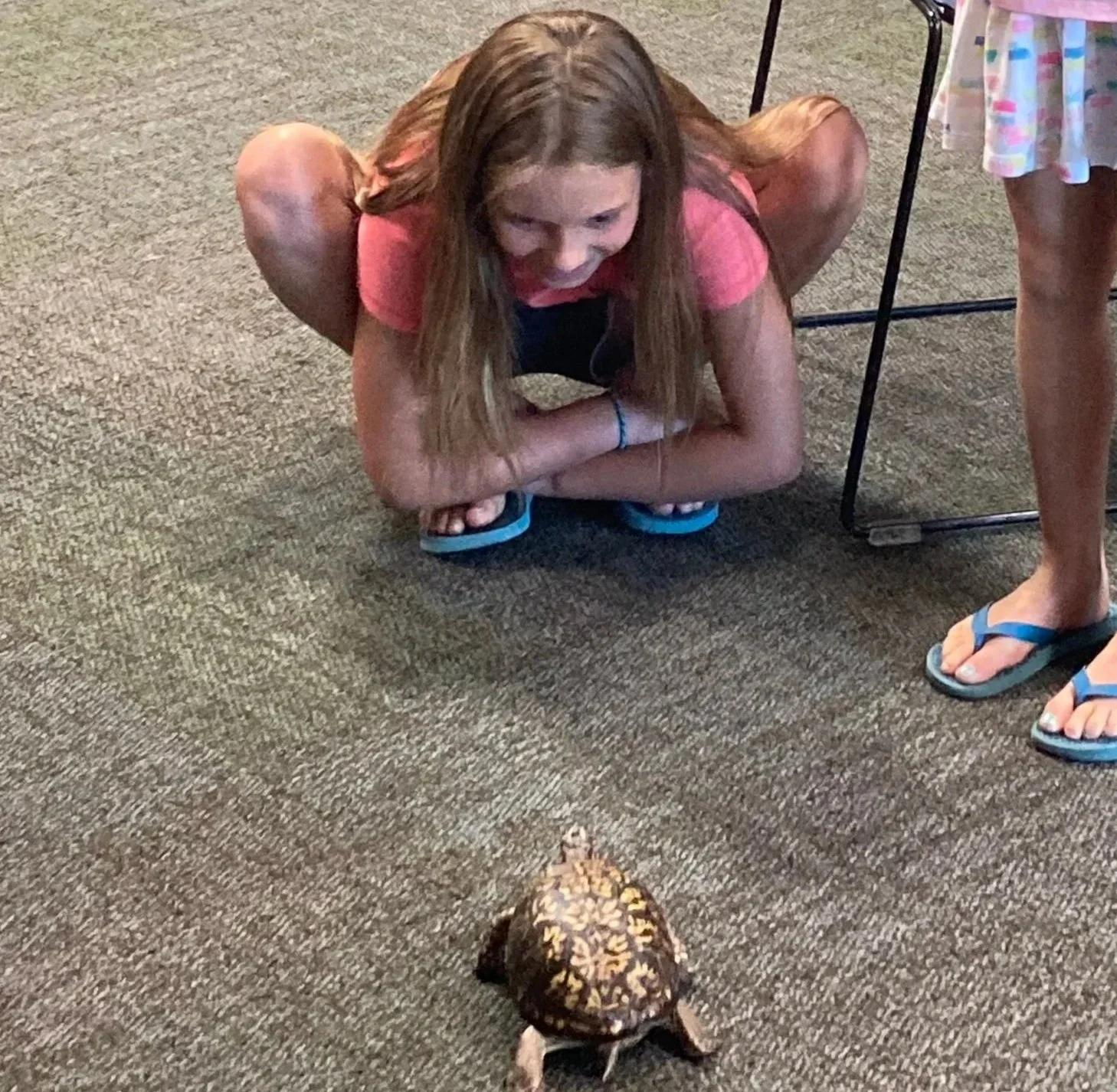
Students will zoom into the world of turtles and explore what it means to be a reptile, their unique anatomy, and how turtles live in New York State. Students will investigate turtle shells and skulls, explore what life is like as a turtle and make their own turtle craft to take home. If scheduling in warm months (April 15- October 15) students will also meet a live turtle!
Themes: structure and function, hands-on investigation, adaptations, reptiles, ecological relationships.
-
Students explore the role of water as it travels through the water cycle in this hands-on activity. Students will also learn about the distribution of water across the world, how it operates in different states, and the many ways water is important to humans.
Themes: earth materials and systems, ecological relationships, cause and effect, patterns.
Middle School (6-8)
-
In this lab, students explore native mammals while learning how their skulls are adapted for their unique survival needs. Students will learn how to use skull size, teeth type and eye placement to critically evaluate each skull and identify the mammal. Finally students will discuss the importance of fur to mammals, and match animal skulls to their corresponding furs.
Themes: biodiversity, adaptations, interpreting data, ecological relationships, patterns, structure and function.
-
Students will use their critical thinking skills to learn about the 8 species of owls that share our state, and how their special adaptations help them survive throughout the year. In this hands-on lab, students will dissect owl pellets to discover what owls are eating and what that tells us about our feathered neighbors.
Please note, there is an additional $3 per student materials fee for this lab to cover costs of pellets.
Themes: adaptations, structure and function, patterns, ecological relationships.
-
Students explore the role of water as it travels through the water cycle in this hands-on activity. Students will also learn about the distribution of water across the world, how it operates in different states, and the many ways water is important to humans.
Themes: earth materials and systems, ecological relationships, cause and effect, patterns.
All Ages!
-
Students will learn about how animals survive our cold New York winters while practicing using animal-inspired gear to traverse the cold and snow. Students will also practice observation and identification skills for native species in their own schoolyard, all while exploring in the winter.
Program size is limited based on sizes of snowshoes available.
Group size for this program is age and grade level dependent
Max Group Size: dependent on snowshoe sizes available. Contact us!
Themes: adaptations, observation, identification,
Our enthusiastic and knowledgeable environmental educators bring nature into your classroom with learning experiences focused on interacting with, and investigating nature.
Our engaging programs get students thinking about the world around them, their place in it, and how classroom topics show up in the real world.
Helpful Information:
Scheduling: Classrooms visits are typically 75 minutes, but can be adjusted based on needs.
Please note: we do not schedule traveling programs in May or June due to high demand for our field trips.
Cost: $175 for the first program, $125 for each additional same day program.
Group Size: Maximum class size per presentation is 30 students, unless otherwise noted.
Location: Your classroom or schoolyard!
hannah@wiltonpreserve.org | (518) 450-0321
What do teachers think?
“Our students had the BEST experience at Wilton Wildlife Preserve & Park! The three rotations allowed for us to fit the needs of our large group! The presenters were incredibly knowledgeable and patient. Our students enjoyed everything about this trip, especially the hands-on experience at the pond...we found tadpoles, saw snakes, a family of geese! It was easy to plan and the team was well organized! We will definitely be planning another class field trip in the future! Thank you WWPP!” -Justine Barton, 3rd Grade Teacher
“I have participated in the program at Wilton Wildlife Preserve & Park for many years. The educators I have worked with have always offered a high quality, educational (and fun!) experience for my second graders. They all share a passion for the environment and are able to engage students with hands-on activities at school and at the Preserve. My students have been an integral part of maintaining the habitat for the Karner blue butterfly and have been able to explore the Preserve in order to learn about the various habitats. I am impressed by the educators’ ability to explain ideas in terms students understand while also conveying new concepts. These programs are well worth your time to help students appreciate nature.” -Sylvia Bayle, 2nd Grade Teacher
Program Funding
Since our programs meet the New York State Standards, both our in-school and field trip programs can be submitted to BOCES to help the program expense for your district to become eligible for state aid. You will need to contact your BOCES to determine the process for the necessary paperwork.
The Connect Kids to Parks Field Trip Grant Program (Connect Kids) is a field trip refund grant program connecting New York school children with nature and New York State history. Each grant provides reimbursement of up to $80 per student (and $160 for Special Education students) for field trips to state and federal parks, forests, historic sites, fish hatcheries and outdoor recreation areas. To find out more information about this great program or to apply for the grant use this web address:
https://parks.ny.gov/environment/connect-kids/grant-program.aspx